There were at least 46 deaths reported just in May 2024 and 56 from March 2024 due to heat strokes in India. While these extreme outcomes often catch our attention, the reality is that prolonged periods of extreme heat — what we witnessed in many parts of India — pose more generalised health risks.
The period from May 16 to June 18 recorded the highest minimum temperature since at least 1951, and about a third of India saw a summer in which the average maximum temperature was more than 2 degrees (Celsius) warmer than normal. 3 At such high temperatures, many Indians simply do not have the means to adequately cool their homes, and workplaces — especially those that require people to be outside — are rarely any more comfortable. Those who cannot adequately shelter themselves in cool places and drink enough water are prone to insomnia, fatigue, headache, fever, not to mention more severe illness. Unlike the discussion in the developed world, which is focused on the exponential growth in energy usage as temperatures rise, the first order problem for most Indians is simply coping with the heat.
This report focuses on the first order question for most Indians. How many people cannot adequately cool their homes, and who are they? To what extent can people protect themselves from the heat when at work? And what is the incidence of heat-induced illnesses in India? To answer these questions, one must combine and cross-reference across satellite data, meteorological data, and survey data. Because health outcomes and cooling in the home cannot be easily ascertained from official or administrative data, the data presented in this report rely on series of rapid surveys conducted in the months of May and June of 2024, during peak heat across much of India, using the technical machinery built by Artha Global’s Centre for Rapid Insights (CRI).
CRI conducted three rapid polls to investigate the impact of excess heat on health (May 28-30) and to understand how people are coping with it at home and at the workplace (June 6-8). The surveys sampled over 27,500 people across India in a matter of a few days and were conducted across 20 states and Union territories. The rapid polling was conducted on mobile phones followed by a rigorous process of estimation and weighting using the National Family Health Survey (NFHS) as an anchor to provide representative claims of those households that own a mobile phone.
Findings included:
45% of Indians reported at least one family member falling ill due to the heat in the past month
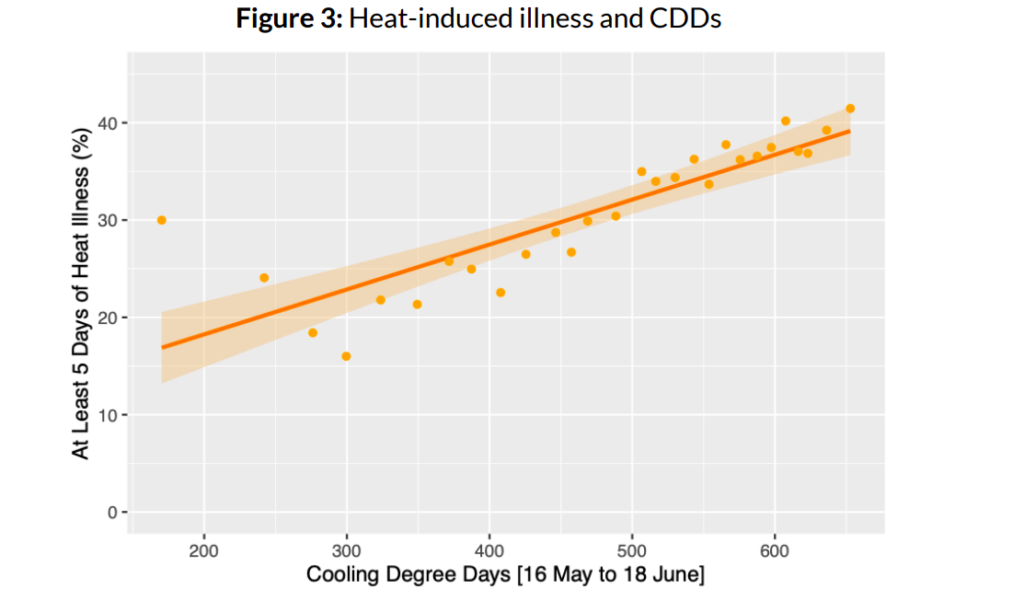
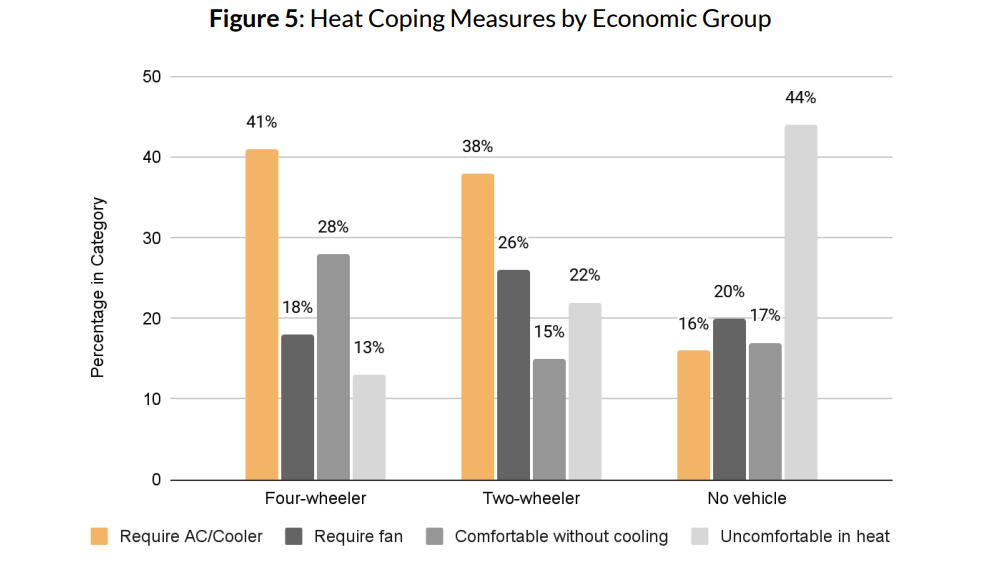
Lower economic groups experience greater health impacts as a result of heat
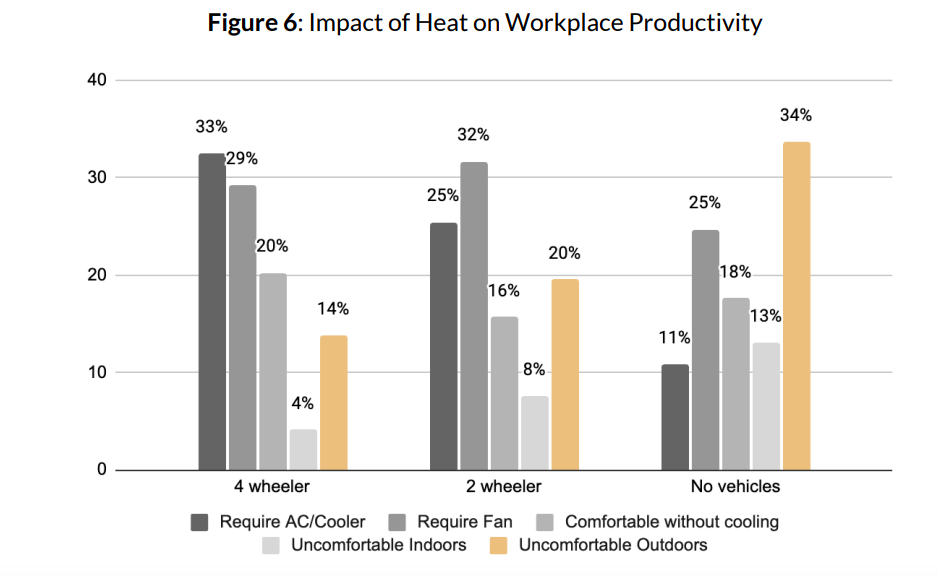
Almost 50% of the respondents that belong to lower income groups (without a vehicle) are uncomfortable in their workplace
Please find the final report here.