January 31, 2025

Rapid Insights
Survey | What is The Health and Productivity Impact of India’s Air Pollution Crisis?
This project examines the economic, health, and productivity costs of air pollution in India. Based on surveys of over 8,600 individuals across eight northern states, our research highlights the direct and indirect impacts of worsening air quality on different demographic groups. We explore how pollution disrupts work, school attendance, and overall well-being, with gender and age playing key roles in exposure and vulnerability.
Context
Each year, particularly in winter, northern India faces a severe air pollution crisis. A combination of vehicle emissions, industrial pollution, dust, and crop stubble burning leads to hazardous air quality levels. In November 2024, Delhi’s Air Quality Index (AQI) reached an extreme 500—categorised as ‘severe’—while neighbouring states such as Haryana, Uttar Pradesh, Punjab, and Bihar faced similar conditions .
The problem extends beyond an environmental emergency. Air pollution has emerged as a public health crisis, with 4 in 10 families seeking medical care due to respiratory distress. Beyond health, pollution is an economic challenge. According to the Reserve Bank of India, by 2030, as much as 4.5% of the country’s GDP could be at risk due to labour hour losses from extreme heat and air pollution.
Given these alarming consequences, understanding the differential impacts of air pollution across demographics, employment types, and coping mechanisms is essential to designing effective mitigation strategies.
Read the full report here.
Methodology
To investigate these dynamics, Artha Global’s Centre for Rapid Insights (CRI) conducted a survey in early November 2024, using Interactive Voice Response (IVR) technology to gather data from a sample of over 8,600 individuals across eight of the worst-affected states—Bihar, Delhi, Haryana, Madhya Pradesh, Punjab, Rajasthan, Uttar Pradesh, and Uttarakhand .
Three core survey questions, focusing on:
- Health impact – Have respondents or their family members experienced respiratory illnesses due to pollution?
- Work/school absenteeism – How many days were missed due to air pollution-related illness?
- Coping strategies – What measures do individuals adopt to protect themselves from poor air quality?
We adjusted the results with National Family Health Survey (NFHS) data to ensure representative claims across gender and age groups.
Outcomes
Policy brief with detailed findings will be published soon.
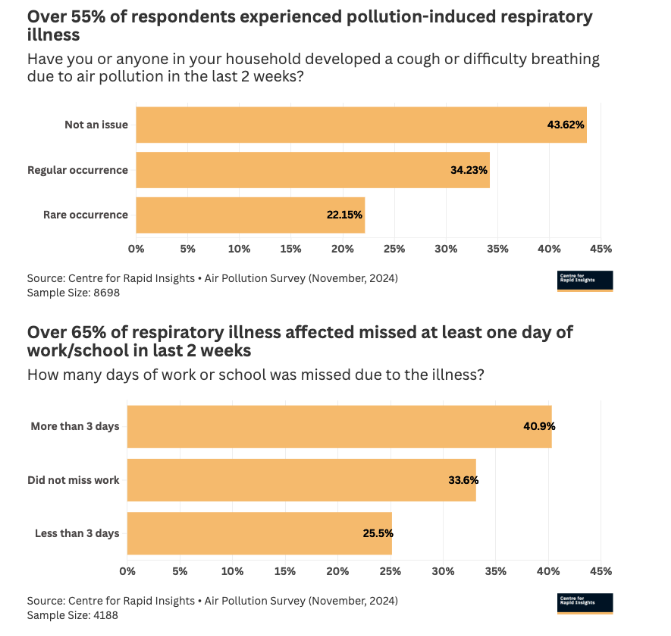
- Illness and productivity lost: 56% of all respondents reported experiencing some form of pollution-induced respiratory illness, with over 65% of these individuals missing at least one day of work or school as a result.
a) Regional insight: More than 50% of respondents across all states reported experiencing respiratory illnesses due to air pollution. In Delhi, Rajasthan, and Punjab —regions with persistently high AQI levels—nearly 60% of respondents report regular occurrences of cough and breathing problems due to poor air quality. - Impact across genders: 56% of respondents across both genders report experiencing a respiratory illness due to pollution.
- Impact across age group: Over 60% of young respondents between the ages of 18 and 30 have experienced pollution-related respiratory challenges, and about 70% of these respondents missed at least one day of work/school in the last two weeks due to this.
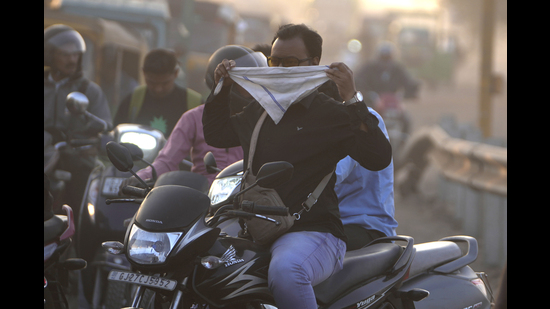
- Coping mechanisms: Wearing a mask is the most preferred coping strategy among the affected respondents, with about 40% of them resorting to this option.
Why this matters
Air pollution is no longer just an environmental issue—it is a public health crisis and a significant economic challenge. The data highlights the urgent need for stronger policies to mitigate pollution at its source, particularly in high-emission sectors such as industry, transportation, and agriculture. Seasonal pollution spikes caused by crop burning require better cross-state coordination and long-term solutions that move beyond reactive emergency measures. Additionally, many low-income households lack access to effective coping mechanisms, underscoring the need for affordable indoor air quality solutions and targeted interventions for vulnerable groups such as children, the elderly, and outdoor workers. Addressing these issues is critical not only for public health but also for sustaining economic productivity and long-term development