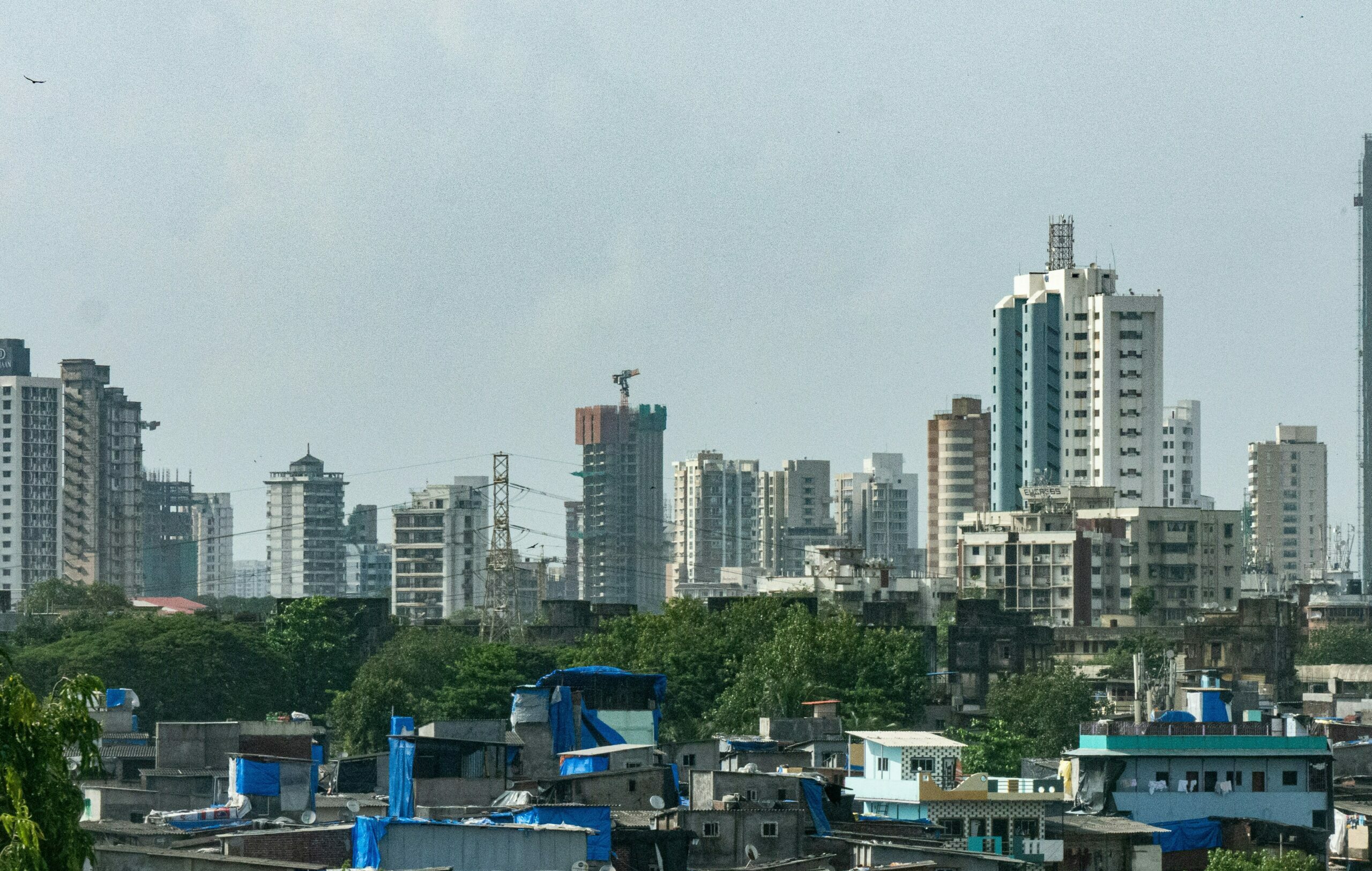
As COVID-19 highlights the perennial issues plaguing Indian cities, research reveals ways to ensure well-serviced and sustainable urban growth. In this article for Firstpost, Patrick Lamson-Hall, Visiting Associate Fellow, Harshita Agrawal, Harsh Vardhan Pachisia and Kadambari Shah, Senior Associates at IDFC Institute, argue that cities in India are growing haphazardly and that this unplanned growth has resulted in inefficient service delivery, necessitating the adoption of efficient planning for future growth.
Excerpts below:
“One possible solution to ensure equitable access to services is to do away with the rural-urban bifurcation and shift to a sliding scale based on objective metrics such as population density: Regardless of urban-rural categorisations, if an area has a certain population density, it will likely benefit from a well-functioning hospital and bank branch rather than a single physician clinic and one bank representative. With neutral measures, urban expansion would be accompanied by better service provision.
This pandemic sounds an alarm about the consequences of inefficient planning and management of cities and poses an opportunity to rethink and rebuild the areas that are most important to the country’s growth. Now is the time to rectify perennial issues such as archaic FSI restrictions and static city development plans. Undertaking such reforms in combination with policies to promote public transport, widen streets and improve the overall efficiency of urban governance will help navigate India’s rapid urbanisation.”
Read the full article here
Note: This work was done by the author/s when they were a part of the IDFC Institute and is republished here with permission.