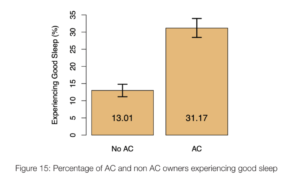
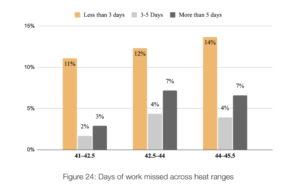
This study captures how households in Delhi experience heat, combining high-resolution climate and remote-sensing data with a primary household survey to estimate impacts on health, productivity, and coping capacity based on appliance ownership.
Rapid Insights
This study captures how households in Delhi experience heat, combining high-resolution climate and remote-sensing data with a primary household survey to estimate impacts on health, productivity, and coping capacity based on appliance ownership.
Extreme heat in India is increasing both in frequency and intensity. Delhi recorded its warmest night in six years while India experienced over 280 heatwave days between March and May 2022. Additionally In June 2024 alone, the country logged more than 40,000 suspected heat-stroke cases and at least 110 confirmed deaths, figures experts believe are substantial undercounts.
The consequences of rising temperatures extend beyond health, contributing to economic losses—heat stress could reduce India’s GDP by an estimated 4.5% and threaten 35 million jobs by 2030. Urban areas are particularly affected due to the Urban Heat Island effect, where built environments can be up to 6 °C hotter than surrounding rural areas, and variations within cities are stark.
Understanding the spatial distribution of heat exposure and its differential impacts on health and productivity is critical for designing targeted, equitable heat action plans. This report responds to this need by examining how urban form, housing conditions and socio-economic vulnerability shape heat risk in Delhi.
Read the report here
Our methodology triangulates satellite based micro-climate data, neighbourhood level built environment characteristics, and household survey data to identify the drivers of heat vulnerability in Delhi. This integrated approach captures both spatial variation in heat exposure and differences in households’ ability to cope with extreme temperatures.
The analysis was conducted in three steps:
1. Spatial Heat Baseline – Factors shaping experienced heat
2. Coping Capacity/ Adaptation: Household Appliances, Occupation and Commute

3. Outcomes: Impact on Health and Productivity