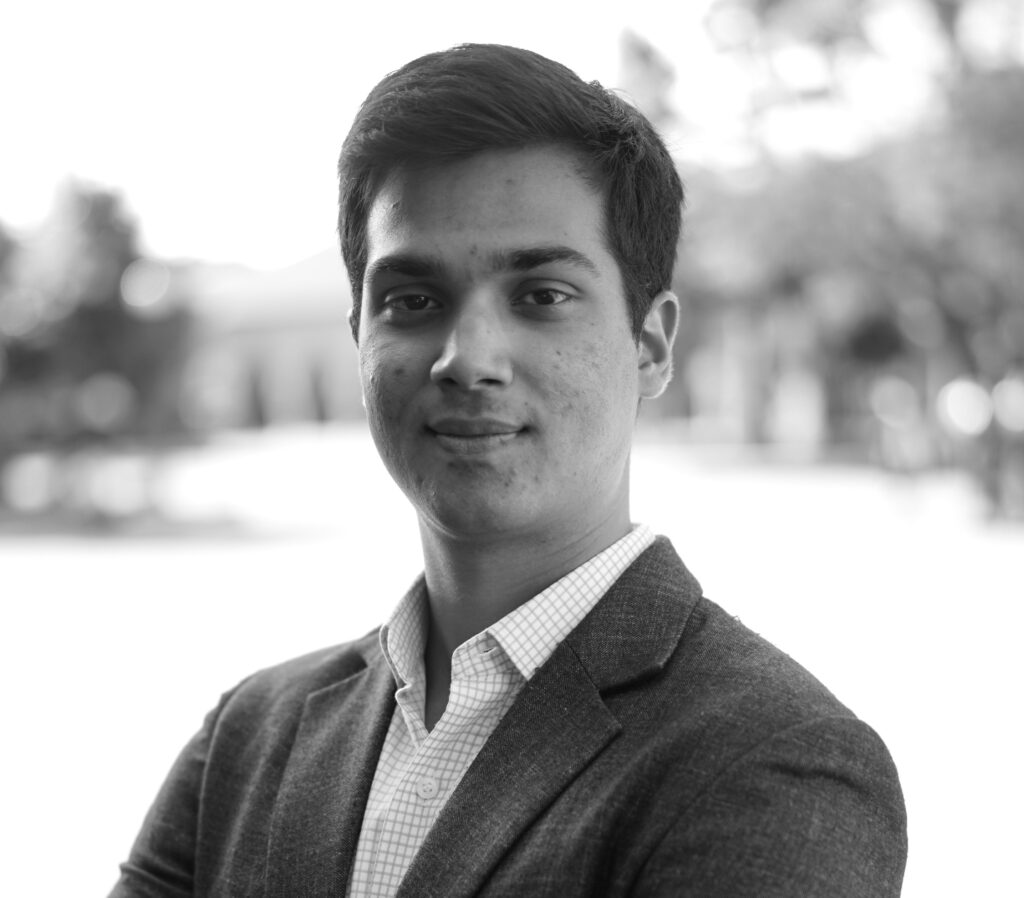
Vibhav Mariwala
Vibhav Mariwala was leading Special Projects at Artha Global. Prior to joining Artha Global, Vibhav was a strategy consultant at Kepler Cannon in New York City where he worked with Fortune 500 companies on market entry, data migrations, and financial technology. He was also a senior analyst at IDFC Institute, a think/do tank in Mumbai, where he worked on state capacity, urbanisation and public health. With global experiences in strategy consulting, entrepreneurship and public policy, Vibhav has worked with a range of stakeholders in government, business, and technology. His work and research on political economy, history, and public policy has been featured in leading publications such as The Indian Express, Deccan Herald, ThePrint, and The Wire.
Vibhav is a mixed-methods researcher from Stanford University, with a Bachelors of Arts (with honours) in History, and a Masters of Arts in Anthropology from Stanford University. He wrote his undergrad and masters theses on the origins of centralised state planning in post-colonial India, and the Gujarati Jain diamond trade. He was awarded the Stanford Alumni Award of Excellence for leadership and the Anthropology Prize for academic performance.