January 31, 2025

Technology and Innovation
What Makes Good DPI? Building The Foundations
A study to identify gaps in governments’ capacity to design, implement and sustain digital public infrastructure
Context
When a government starts on its Digital Public Infrastructure (DPI) journey, what does it need to reach its destination?
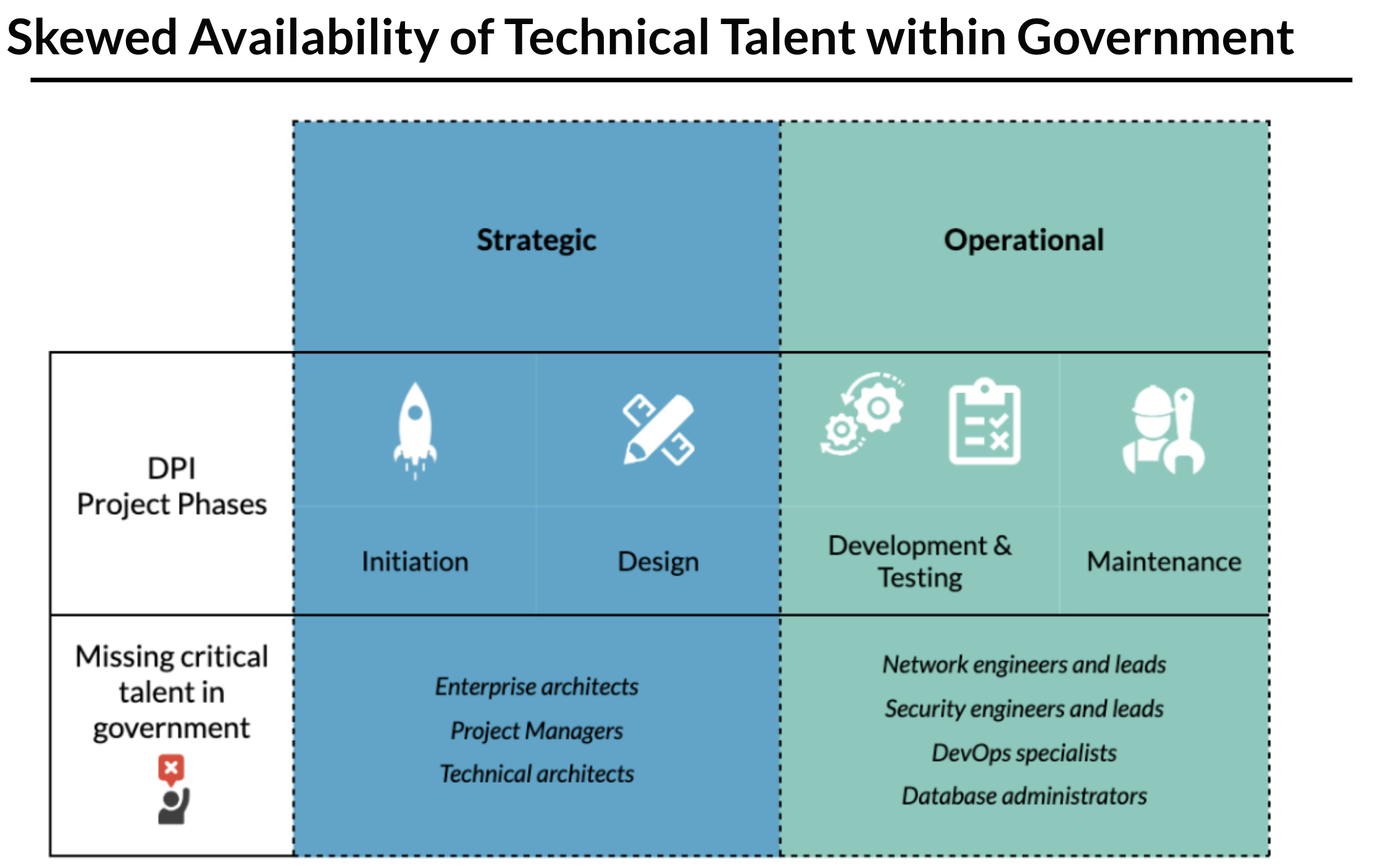
DPI has the potential to transform governments, markets and societies. However, governments often need structural support for acquiring high-level technical skills. These skills are essential for retaining strategic control over mission-critical national assets – and for guaranteeing DPI that is safe and inclusive in driving socioeconomic outcomes.
Methodology
We set out to identify the in-house skills governments need to design, implement and maintain good DPI, the common gaps in these skillsets, and lastly, a model for plugging these gaps.
We conducted in-depth interviews with 31 experts representing stakeholders across the DPI ecosystem: from DPG providers and multilateral organisations to government officials and civil society networks, to give us a 360 degree perspective of the capacity landscape. We supplemented this with secondary research and analysis of public sector technology adoption and maturity.
Outcomes
We developed a technical capacity framework that helped us identify vulnerabilities in governments’ ability to steer DPI-based digital transformation.
Based on this framework, we also designed a capacity building model with East Africa as a focus region. These recommendations supported the study’s funder, Co-Develop, in developing its DPI funding strategy and informing their support for the Centre for Digital Public Infrastructure at IIIT-Bangalore. They also led us to partner with eGov Foundation and launch the DPI Academy initiative to build digital transformation capacity at the national and global level.