Skip to content
  • About Us
    • About Artha Global
    • Our Approach
    • Our Networks
    • Our Team
    • Governance
  • Centres
    • Emerging Cities
    • Technology and Innovation
    • Rapid Insights
    • Growth, Jobs and Prosperity
  • Publications
    • Reports
    • Papers
    • Policy Briefs
    • Journal Articles
    • Blog
  • Events
    • Artha Conversations
  • Projects
    • All Projects
    • Knowledge Partnership for Universal DPI Safeguards
    • The DPI Academy
    • Piloting “Clean Air Zones” in Andhra Pradesh
    • Survey | Changing Dynamics: Female Labour Force Participation and Livelihood Schemes in Rural India
    • Survey | How Are Indians Coping with Rising Heat Stress?
Artha Global

Menu level 1

  • Publications
    • All Publications
    • Reports
    • Papers
    • Policy Briefs
    • Journal Articles
    • Blog
  • Events
    • Artha Conversations
  • Careers & Internships
  • Media
    • All Media
    • Op-eds

Menu level 1

  • About Us
    • About Artha Global
    • Our Approach
    • Our Networks
    • Our Team
  • Centres
    • Emerging Cities
    • Technology and Innovation
    • Rapid Insights
    • Growth, Jobs and Prosperity
  • Publications
    • All Publications
    • Reports
    • Papers
    • Policy Briefs
    • Journal Articles
    • Blog
  • Events
    • Artha Conversations
  • Media
    • All Media
    • Op-eds
  • Careers & Internships
×


Emerging Cities

Report | A Supply Side Agenda to Improve Housing Affordability in India

Reframing the contours of the urban housing problem, and pivot policy towards affordable housing


January 15, 2025

Context

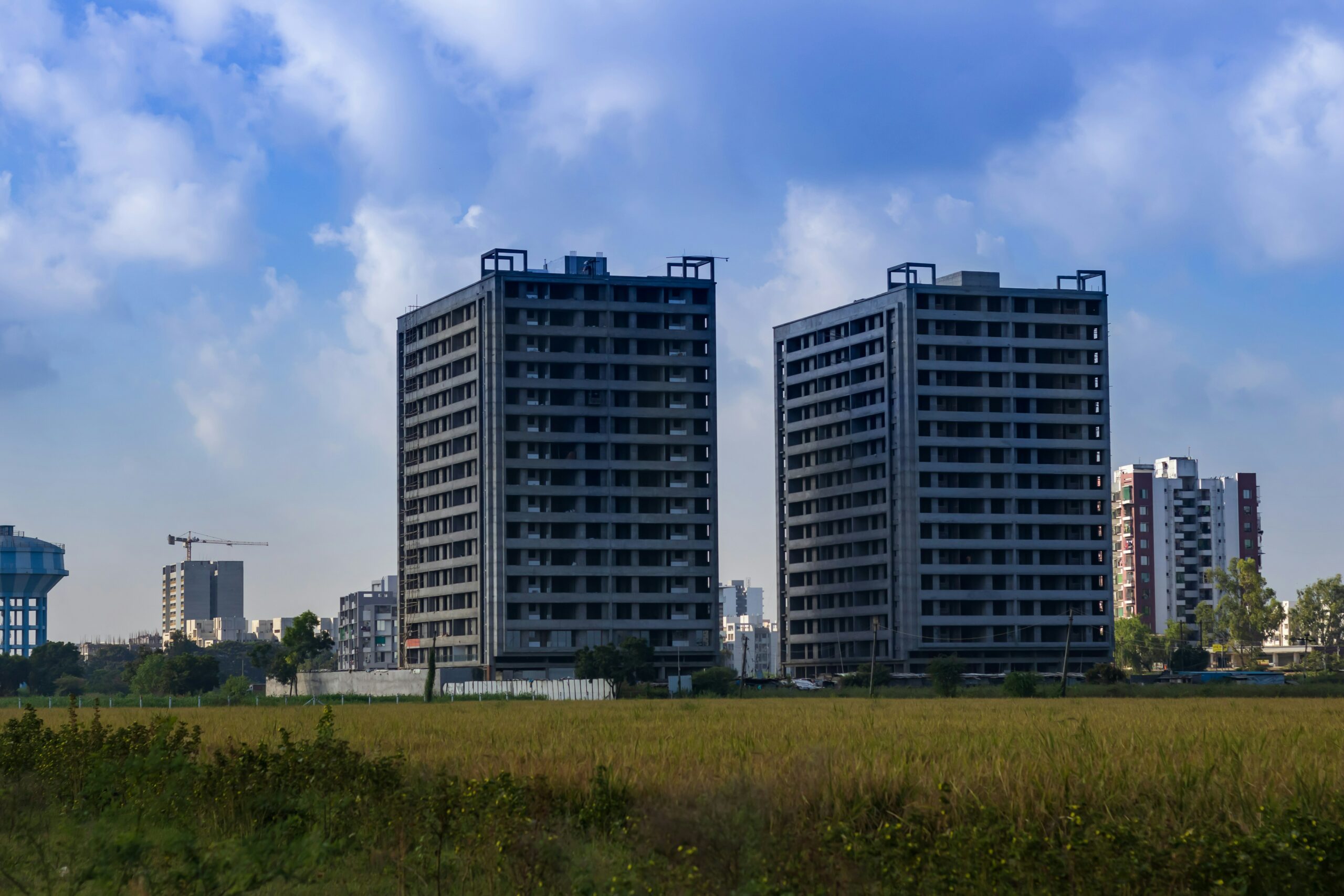
India’s urban housing issues are complex and cities face significant challenges. This includes limited capacity to build new affordable housing by the public sector, resultant housing shortages, and a high vacancy rate of empty houses due to limited and expensive housing stock. 

Housing shortages can be attributed to restrictive land use regulations that limit the Floor Space Index (FSI), and limits on residential building height. It’s well recognised that these arcane measures that were originally created to restrict population densities are regressive and need urgent reform. It is also important to note that access to affordable housing leads to improved job opportunities.

Read the full report here.

Methodology

The project methodology focused on interviewing key experts from the real estate sector, think-tanks, and government, as well as conducting an in-depth analysis of housing data and other relevant data sets to highlight the challenges faced in the urban housing sector. These challenges range from the difficulties faced by the real estate sector in accessing formal credit for acquiring land, to extremely high transaction costs. Rigid tenancy laws create an artificial supply constraint. The lack of land use-transport integration results in an increase in usage of private vehicles, and decrease in public transit mode share.

The methodology also refers to key indicators including the growth rate of property investments (Residex- a residential property price index) across cities, and comparing it to other investment opportunities such as gold, Fixed Deposit, and the Sensex S&P 30. Additional factors that have been compared include  residential building height restrictions in Indian cities vs global cities, and maximum free FSI permissible for Indian cities vs global cities

Outcomes

The report was launched by Shri. Hardeep Singh Puri, then – Union Minister of State for Housing and Urban Affairs (Independent Charge) at the IDFC Institute Political Economy Dialogues in June 2018. Key impacts that the report helped generate over the years are shared below. 

  • The recommendations from the report were published in the 2017-18 Economic Survey of India
  • We were invited to teach a course on affordable housing at LBSNAA to senior civil servants, and over the years we have been invited to present our recommendations on improving housing affordability to senior government officials
  • We shared housing policy recommendations for three Union Budgets
  • Based on the recommendations, NITI Aayog conducted a survey to create an inventory of public lands to free up land for housing and other uses. 

As a member of the Urban Reforms Working Group, Government of Punjab, in partnership with the World Economic Forum, we have provided bespoke training on property tax reform, urban expansion, and sustainable mobility. We have also been invited to be a member of  MoHUA’s Working Group on Data Smart Cities, the National Urban Learning Platform and other committees. 

Team Members

Kshitij Batra

Sahil Gandhi

Pritika Hingorani

Swapnil Bhandari

Meenaz Munshi

Vaidehi Tandel

Harshita Agrawal

Rohan Shridhar

Our Work

Paper

Decline of rental housing in India: The case of Mumbai

This paper assesses the impact of rent control for Mumbai, where it has created a shortfall in formal, affordable rental housing and contributed to distortions in the land market

Policy Brief

IDFC-U Roundtable on “Facilitating an Easy Market for Affordable Housing Development”

IDFC Institute hosted a private roundtable on “Facilitating an Easy Market for Affordable Housing Development in India” with developers, financiers, policy experts, and academics.

Report

India Infrastructure Report: Making Housing Affordable

Land and real estate markets in Indian cities have been overly regulated for a long time. Builders in India today are merely responding to incentives created by the current regulatory framework.

Op-ed

Opinion | A look back at earlier debate may guide our economy ahead

Niranjan Rajadhyaksha makes a case for revisiting the economic discourse of the 1970s that proved seminal for later reforms and could help us address current problems

Op-ed

Opinion | The burden of free parking on our cities

In this Livemint article, Junior Fellow, Kshitij Batra and former Associate, Rohan Shridhar argue for disincentivizing car ownership and not treating parking as a public good.

Op-ed

Opinion | The Rental Housing Approach for India

In this article for Mint, Pritika Hingorani, Meenaz Munshi and Rohan Sridhar explain why rental housing must form a critical piece of the push to deliver affordable housing for all.

Op-ed

Opinion | Why are so many houses vacant?

Sahil Gandhi, Assistant Professor at TISS and Meenaz Munshi, Senior Associate at IDFC Institute examine the problem of housing shortage in India cities in a well read Economics blog curated by Professor Ajay Shah.

Op-ed

Opinion | Will Rera embolden powerful builders?

The costs of penalties, refunds and interest payments thus borne through hamstrung state capacity by developers will then ultimately be paid by consumers in the form of higher prices, without fundamentally increasing housing supply

Paper

Revisiting the Real Estate Bill, 2013

The central government has introduced the Real Estate (Regulation and Development) Bill, 2013, which sets up a regulatory authority to protect consumers as well as promote the real estate sector.
Artha Global

Subscribe to the Artha Global mailing list to receive updates on our work and upcoming events.

    Email:      contact@artha.global
    Phone:    +91 22 69023333
    Address: 📌 India: 401, 4th Floor, Construction House 'A', 24th Road, Off Linking Road, Khar West, Mumbai 400 052
         United Kingdom: 4 Grovelands Boundary Way, Hemel Hempstead, Hertfordshire HP2 7TE

    • Terms of Use
    • Privacy Policy
    • POSH Policy
    • Equal Opportunity Policy
      • Publications
      • Events
      • Blog
      • Careers & Internships
      • Media

    © 2024 Copyright Artha Global. All Rights Reserved